

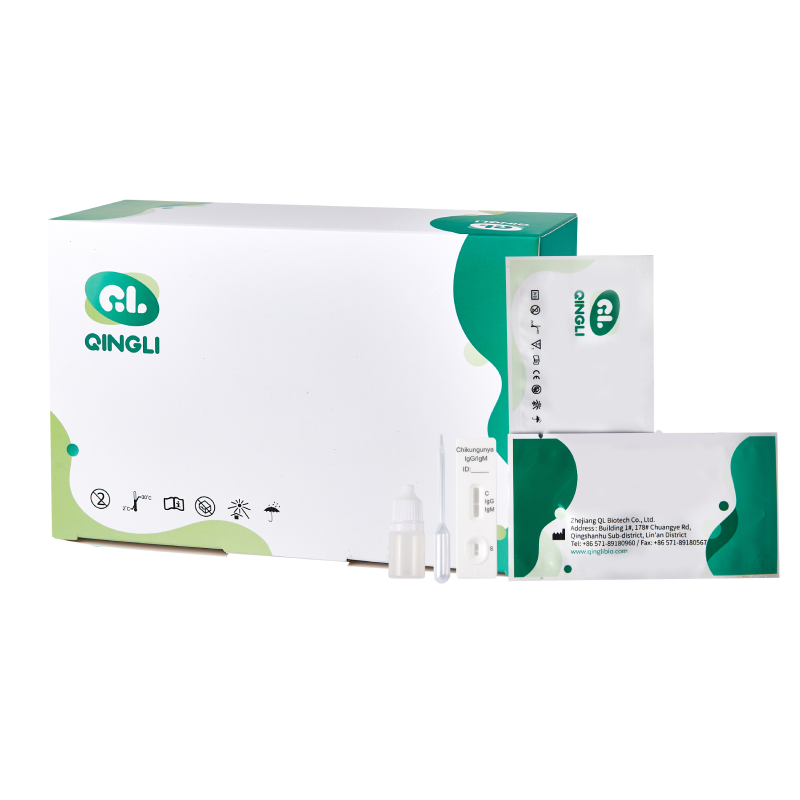
Chikungunya IgG/IgM Rapid Test
SUMMARY AND EXPLANATION OF THE TEST
Chikungunya is a rare viral infection transmitted by the bite of an infected Aedes aegypti mosquito. It is characterized by a rash, fever, and severe joint pain (arthralgias) that usually lasts for three to seven days. The name is derived from the Makonde word meaning "that which bends up" in reference to the stooped posture developed as a result of the arthritic symptoms of the disease. It occurs during the rainy season in tropical areas of the world, primarily in Africa, South-East Asia, southern India and Pakistan1-2.
The symptoms are most often clinically indistinguishable form those observed in dengue fever. Indeed, dual infection of dengue and chikungunya has been reported in India3. Unlike dengue, hemorrhagic manifestations are relatively rare and most often the disease is a self limiting febrile illness. Therefore it is very important to clinically distinguish dengue from CHIK infection.
CHIK is diagnosed based on serological analysis and viral isolation in mice or tissue culture. An IgM immunoassay is the most practical lab test method4.
The Chikungunya IgG/IgM Rapid Test utilizes recombinant antigens derived from its structure protein5, it detects IgG/IgM anti-CHIK in patient whole blood,serum or plasma within 15 minutes. The test can be performed by untrained or minimally skilled personnel, without cumbersome laboratory equipment.
Product Detail
-
Brand: QL
Specimens: : Whole Blood/Serum/Plasma
Reading time:in 10 minutes.
Pack:25 T
STORAGE: 2‐30°C
KIT COMPONENTS(Device)
Individually packed test devices
Each device contains a strip with colored conjugates
and reactive reagents pre-spreaded at the
corresponding regions
Disposable pipettes
For adding specimens use
Buffer
Phosphate buffered saline and preservative
Package insert
For operation instruction
ASSAY PROCEDURE
2.Place the test device on a clean and level surface. Hold the dropper vertically and transfer 2 drops of Sample (approximately 50 µL) to the specimen well (S) of the test device, then add 1 drops of buffer (approximately 40 µL) and start the timer.
3.Wait for the colored line(s) to appear. Read results at 10 minutes. Do not interpret results after 20 minutes.
INTERPRETATION OF RESULTS
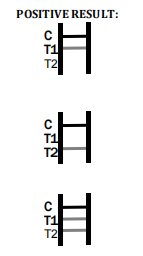
IgM Positive:* The colored line in the control line region (C) appears and a colored line appears in test line region 1 (T1). The result is positive for Chikungunya virus specific-IgM and is probably indicative of secondary Chikungunya infection.
IgG Positive:* The colored line in the control line region (C) appears and a colored line appears in test line region 2 (T2). The result is positive for Chikungunya specific-IgG antibodies and is indicative of primary Chikungunya infection.
IgG and IgM Positive:* The colored line in the control line region (C) appears and two colored lines should appear in test line regions 1 and 2 (T1 and T2). The color intensities of the lines do not have to match. The result is positive for IgM & IgG antibodies and is indicative of secondary Chikungunya infection.
NEGATIVE RESULT: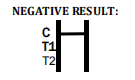
The colored line in the control line region (C) appears. No line appears in test line regions 1 or 2 (T1 or T2).
INVALID RESULT:
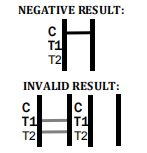
Control line (C) falls to appear. Insufficient buffer volume or incorrect procedural techniques are the most likely reasons for control line failure. Review the procedure and repeat the procedure with a new test device. If the problem persists, discontinue using the test kit immediately and contact your local distributor.